Coppicing Explained: Why Traditional Woodland Management Helps British Wildlife
Walk through an old English wood in late winter and you might come across a scene that looks like vandalism: a stand of hazel or sweet chestnut sawn off a few inches above the ground, the stumps pale and fresh, the ground around them suddenly open to the sky. Come back in three years and that same patch will be a thicket of new shoots, bramble, violets and butterflies. This is coppicing, one of the oldest forms of woodland management in Britain, and one of the most effective ways of keeping a wood alive.
What coppicing actually is
Coppicing means cutting the stems of certain broadleaved trees close to the ground, in winter, and letting them regrow. The tree is not killed. Most of these species — hazel, sweet chestnut, willow, ash, lime, oak and field maple among them — carry dormant buds near the base of the trunk. Once the light hits them, they shoot away, and within a season you have a cluster of new stems rather than a single trunk.
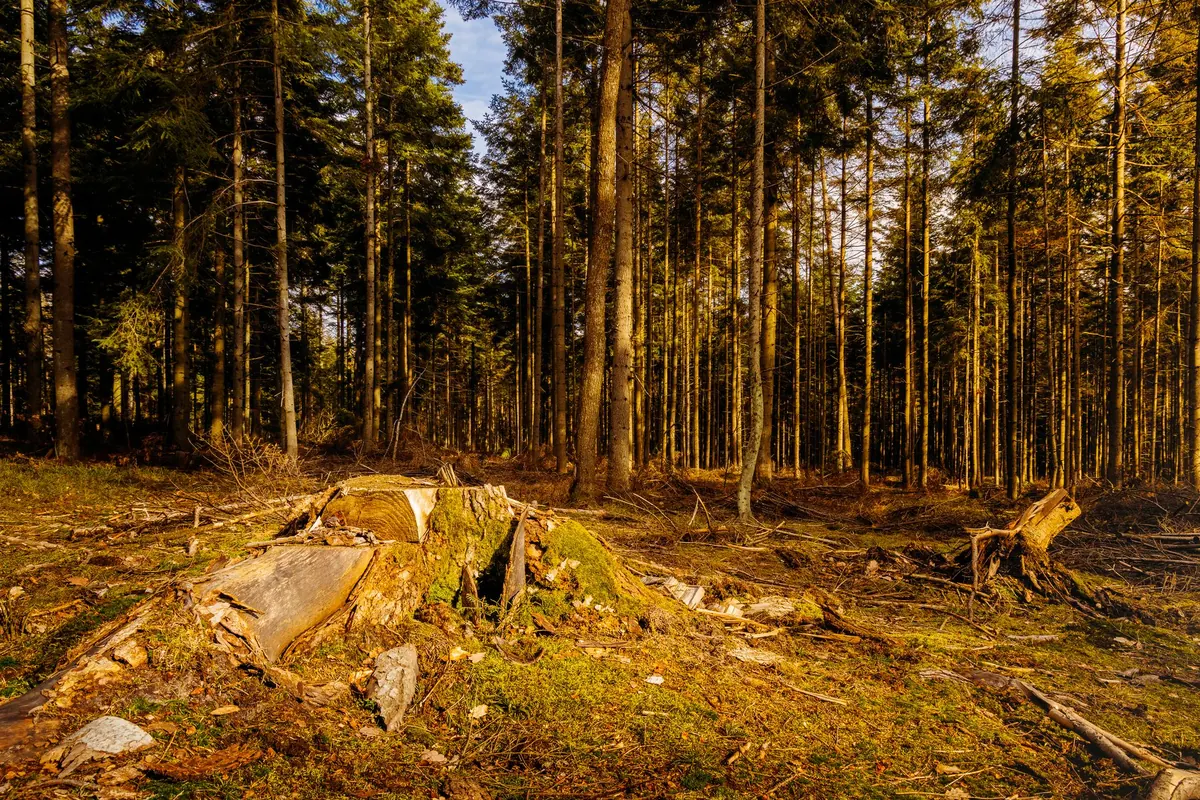
The result is the distinctive multi-stemmed tree you can spot in ancient woods: a stout base, called a stool, with anything from a handful to thirty stems rising from it. Cut those stems again after a set number of years and you have a coppice rotation. Cut higher up, out of reach of browsing animals, and the same idea is called pollarding. Leave a few oaks to grow tall above the coppice and you have a system known as coppice-with-standards, which supplied small wood and timber from the same patch of ground.
The coppice cycle, stage by stage
Every coppiced wood runs on a cycle, and each stage suits different plants and animals. Cutting a wood in blocks, rather than all at once, is what makes it so good for wildlife: at any moment you have open ground, young scrub, mature thicket and shaded older growth all within a few hundred metres of each other.
- The cut. Stems are felled between late autumn and early spring, while the sap is down and birds are not nesting. Useful wood is sorted for crafts or fuel; brash is left in piles, which shelter invertebrates, hedgehogs and reptiles.
- Year one. The ground floods with light. Seeds that have sat dormant for decades germinate. Wood anemone, primrose, foxglove, violet and willowherb appear, and bare sunny patches suit solitary bees and basking insects.
- Years two to five. Regrowth rockets up — hazel shoots can add a metre or more in a good season. The patch becomes a dense, thorny thicket, perfect nesting cover for warblers, nightingales and dormice.
- Years five onwards. The canopy closes and the ground darkens. Flowers fade, butterflies move to the rides and edges, and the value of the block shifts to shelter and shade.
- The recut. Once the stems are the right size for their intended use, the block is cut again and the cycle starts over.
Which trees, and how long between cuts
Rotations vary enormously with species, soil, climate and what the wood is being grown for. The figures below are the usual ranges for lowland Britain, but treat them as a guide rather than a rule.
- Hazel: roughly 7–15 years. Hurdles, thatching spars, pea sticks, bean poles, charcoal.
- Sweet chestnut: around 12–20 years. Fencing stakes, posts, cleft palings, and excellent firewood.
- Willow: one to three years for basketry withies, longer for fuel or biomass.
- Ash: about 10–15 years. Tool handles, gates and furniture — though ash dieback has made this harder to plan for.
- Oak and lime: slow, often 15–25 years or more. Lime was traditionally grown for carving and turnery.
The wildlife that depends on the cut
The species that struggle most in Britain's woods are not the ones that need deep shade. They are the ones that need light, warmth and disturbance — conditions that were once created by people cutting wood every few years.
Dormice are the classic example. They feed on hazel nuts and nest in dense regrowth, so they need a wood with plenty of young hazel and connected hedgerows to move through. Nightingales, garden warblers and whitethroats want the tangled scrub stage. Fritillary butterflies, including pearl-bordered and Duke of Burgundy, depend on sunny, recently cut ground where violets and cowslips grow in warm, sheltered conditions. Old stools rot into soft deadwood that supports beetles and fungi found almost nowhere else.
The trick is not to coppice everything, but to stagger the cutting. A wood with blocks of different ages — plus wide rides, scalloped edges and a few big old trees left alone — will hold far more species than a uniform stand of any kind.
Why so many woods went dark
For centuries, coppicing was ordinary work. Most villages needed poles, hurdles, fuel and fencing, and the woods supplied them. That changed gradually through the nineteenth and twentieth centuries: coal and gas replaced firewood, cheap imported timber undercut home-grown produce, plastic and metal replaced wicker and wood, and two world wars scattered the rural workforce that did the cutting.
Left alone, a coppice stool grows up into a tall, crowded tree, and the wood closes over. Add heavy deer browsing, grey squirrels stripping bark, and conifer planting on old broadleaved sites, and the result is thousands of acres of dark, even-aged woodland with little on the woodland floor. Plenty of ancient woods in Britain are still full of flowers and butterflies, but only in the strips where light reaches the ground.
Coppicing today: crafts, conservation and cash
The revival has come from two directions. Wildlife trusts, the Woodland Trust and countless local groups cut blocks on rotation because they know what follows the saw. At the same time, green woodworkers, charcoal burners, hedge layers and hurdle makers have rebuilt small markets for coppice products.
Neither works for long without the other. A coppice cut with no use for the wood is expensive and hard to justify; a coppice with a market behind it tends to get cut on time, and the wildlife follows. If you want to support the practice, buy local charcoal, hazel hurdles, bean poles and chestnut fencing when you can. It is one of the few purchases that directly keeps a wood light and a habitat intact.
How to spot coppicing, and how to get involved
You do not need permission or training to enjoy a coppiced wood — just a bit of know-how about what you are looking at.
- Look for stools: broad, knuckled bases with many stems, often with moss and fungi on the old wood.
- Look for earthworks: woodbanks and ditches around compartments are the ghosts of old coppice boundaries.
- Time your visit: winter shows the cut and the structure; late April to June shows the flowers and butterflies that follow it; autumn is good for nuts and fungi.
- Volunteer: most county wildlife trusts run winter work parties, and many larger woods run coppice days where you can try a bow saw and billhook with supervision.
- If you manage a small wood: cut a little each year, stagger the blocks, and never take on more than you can finish. Avoid cutting between March and August, when nesting birds are legally protected, and fence or guard regrowth where deer and rabbits are a problem.
- Stay safe: chainsaw work is genuinely dangerous. Get proper training, wear the right kit, and leave anything beyond your experience to a contractor.
Seen this way, a coppiced wood stops looking like a wood that has been damaged. It looks like one that is still in use — and that is exactly why the nightingales, the fritillaries and the dormice are still there.
Photo: Maciej Cisowski / Pexels

Hedgehog or Badger? How to Identify Night-Time Garden Visitors in the UK
Learn to tell hedgehogs, badgers and other night-time garden visitors apart by their tracks, droppings,...
How to Forage Blackberries in the UK: Season, Habitat and Safety Rules
A practical guide to picking wild blackberries in the UK: how to read the season, find the best hedgerow...
About Us